Friday, July 6, 2012

20 Random Facts About Me - #3

So you think you know a lot about me, do you? Probably not, but here are another 20 facts that you might or might not have known.

  1. My father is a carpenter.
  2. I have a passion for photography.
  3. I prefer Windows over Mac.
  4. My favorite contemporary TV series is Castle.
  5. My oldest brother is a physics major.
  6. I review media as a hobby (you probably didn't know this).
  7. My favorite webcomics are "Brawl in the Family" and "Blank It."
  8. I hate cleaning my room.
  9. I get new books faster than I can read through them.
  10. My favorite video games are An Untitled Story and Bastion.
  11. I love lemons. And limes.
  12. My most common nickname is "Reu," but it's mostly only used on the internet.
  13. I want to learn guitar, but I currently know nothing about how to play one.
  14. I'm not currently writing any books—I'm just planning them.
  15. My favorite color is blue.
  16. I still love LEGOs, even though I rarely buy them anymore.
  17. I have a habit of winning book giveaways.
  18. The first video game I ever played was Super Mario 64.
  19. I find one of the most irritating sounds ever to be that of a vacuum cleaner.
  20. Somebody was vacuuming when I typed #19.

Well, I hope you learned something important today.

Saturday, June 30, 2012

Amelia's Last Secret by Eric Wilson


Amelia's Last Secret is a novella by bestselling author Eric Wilson about the fate of Amelia Earhart—one of the most prominent and well-respected women in the history of the world. It is available on Amazon for $2.99 exclusively as an ebook.

Everyone knows Amelia Earhart, and everyone has at least speculated about her mysterious disappearance in history. Leave it to somebody like Eric Wilson to take the facts as we know them and write a brilliant story from it. He took real people, events, and information, and put them all together in an intriguing and believable manner full of mystery and suspense.

The novella is split into four parts, taking place over the past seventy-five years:
Part One - July 1, 1937
Part Two - June 8, 1944
Part Three - May 17, 2012
Part Four - July 2, 1937

The first part begins from the point of view of Amelia Earhart, and ends with a cliffhanger, which is concluded in the final part. The two middle parts continue the story of how Ms. Earhart's fate was discovered. All four parts were extremely well-written and make you want to continue reading. The amount of research put into the story is astounding and truly adds life to the tale.

Eric Wilson is an amazing writer, and Amelia's Last Secret helps to prove it. The ending is a little sad—but you can't deny that the inevitable would happen. The novella could make a great movie, or at least a short film. Kudos to Mr. Wilson for writing such a masterpiece. It is well worth your reading time.

Monday, June 25, 2012

Robert Liparulo - The 13th Tribe Interview


Robert Liparulo is a man I've known about for a long time, as he's known in certain circles to be an amazing author. I met him last August at an event and received an advance copy of his book The 13th Tribe. I read it and was amazed. I haven't since read any more of his novels, but recently he was willing to let me send some questions his way about The 13th Tribe, and here are the results.

---------

Reuben Horst: How have you and your family been recently, Robert?

Robert Liparulo: We've been well, thank you. My son Anthony is in his first year of high school. He's a soccer nut. My youngest daughter is in kindergarten and taking dance lessons. My oldest son is embarking on a 7,000-mile hike along the Appalachian, Great Divide and Pacific Coast trails. And my oldest daughter is now living in Santa Fe. We're all having a blast.

RH: What exactly gave you the idea for this story?

RL: Some time ago, I started thinking about vigilantism, frontier justice. I think most of us would say we'd do something to stop, for example, a child abuser, even if we have to go outside the law to do it (assuming all other recourses have failed). But what are the ramifications of that . . . to society? To our souls? It's a scary door to open. The best way to examine a topic is to exaggerate it, or look at how it functions under extreme circumstances. I wanted to look at vigilantism that way: an exaggerated reason to be a vigilante . . . how far could you take it . . . what do you become if you practice it over a long period of time?

You can't think too deeply about taking the law into your own hands, about hurting people before they can hurt others, without eventually getting around to thinking about the nature of forgiveness and grace. So now there's God, filing off the edges of my story, shaping it into something bigger than it was before.

The 13th Tribe can be summed up in two words: Immortal vigilantes. But, really, it goes much deeper. It explores our struggle to grasp God's holiness; our stubborn belief in "earning" God’s favor, though we know better; and how even our good intentions can be twisted when we insist on abiding by our own limited logic instead of God's righteous wisdom. All of this in a story filled with action, cutting-edge technology, and complex characters—the kind of story I like reading myself.

RH: How much research is involved when writing a novel like The 13th Tribe? Are there any specific places you went or things you did to help you with research for the book?

RL: I traveled to many of the locations, read books and talked to experts about immortality, biology, theology, weapons (like flame throwers), high-tech military inventions (such as invisibility suits), relics, archaeology . . . I filled three six-inch binders with notes, maps, and photographs. I used to be an investigative journalist, so I tend to research a lot, and I have no qualms about asking the leading experts in their fields for interviews and throwing tough questions at them. I try to find the little gems that either stun readers or make everything in a scene feel just right.

I believe the only way to make such a wild concept as immortality palatable and entertaining to readers is to make everything else in the story as factual and real as possible. All the locations are real, and I hope detailed enough for readers to get a true feel for each place. And one way the immortals are traced through history is through actual art—such as the Spinario or Boy with Thorn and Jean Auguste Dominique Ingres's Apotheosis of Homer. I did a lot of research into biblical events, such as what really happened at the gold calf, and studied extra-biblical stories, such as the Apostle John being tortured by putting him into a vat of boiling oil. Many of the historic events described—a Civil War massacre, Rasputin's death— really happened.

A lot of times, science eventually "catches up" with God's miracles and we can explain them in human terms—which doesn't make them any less miraculous, but shows that God often uses the incredible things He created for us on earth to facilitate His will. I wanted that to be the case with the immortals, so I explain how every cell in the human body has telomerase genes—called immortal genes—which allow cells to replicate forever, which would result in the cessation of aging. Trouble is, they are "switched on" in only a few cells. I posit that God activated all the telomerase genes in the immortals, so there's both a biological and a supernatural reason for their immortality.

RH: How long did it take you to write the novel, from initial concept to final draft?

RL: About eighteen months, including the beginning convolutions from a book about vigilantes to a Christian story about immortal vigilantes. Most of the time was spent researching and deciding how to merge a solidly Christian story into my style of action-adventure-thriller.

RH: How much change did the story go through during that time?

RL: Other than that first big change, going into both the paranormal and Christian fields, it didn't change much from my initial concept. But I don't outline, so there’s not that much for my stories to change from.

I don't outline because I want my characters to lead me through a story. If I outline too extensively or too far ahead, then it's me, as an author, who is forcing my characters to behave the way I would behave in those situations. When I create compelling characters and set them free, they develop what seems to be personalities and behaviors all their own. They start to do things I never would have dreamed they would. They respond differently from the way I thought they would when I thought through the story. But I do have certain points in the story that I know I have to reach; I just prefer to let the characters tell me how to get there. Typically, I know about three days in advance which scenes are coming up. That helps me stay on track without being too overbearing on my characters.

RH: Who was your favorite character from the novel?

RL: Just because I spent so much more time with him than the others, I'd have to say Jagger. But Nevaeh's confused passion to please God intrigues me. Owen personifies my desires to know God better. Even Tyler endeared himself to me. When I finished the manuscript, I missed all of them.

RH: How did writing the novel impact your life?

RL: I've always studied His word, always sought deeper understanding, but now, writing about it, I'm learning so much more. To make these stories work, to make faith integral to the plots, I have to excavate theology like I never have before. What struck me more while writing and researching The 13th Tribe is that at every turn, I'm awed by His love for us, his tolerance and grace. We are so unworthy, but still, there He is, arms wide open.

RH: Without giving too much away, can you tell us something about The Immortal Files #2?

RL: We're back at St. Catherine's Monastery with Jagger, Beth, Tyler, and the monks, when a group attacks. We find out there is another group of immortals, called the Clan. These guys are really nasty. They don't care for God at all, and their only goal is to grief God by hurting his children. They get their hands on an artifact that allows them to peel back the curtain between our world and the spiritual realm. I had a great time writing it.

RH: Do you know the title of The Immortal Files #2 or approximately when it will be released?

RL: We're playing with a few titles now—The God Stone, The Vision Stone, or The 7th Vision (in keeping with the ordinal theme from The 13th Tribe). It should be out early 2013. I'm hoping for the third in the series to come out later that year.

RH: Are you currently working on any projects other than the Immortal Files series?

RL: I've started the third Immortal Files book, but I've decided to try something I haven't done before: I'm also working on the first book of the Hunter series, a YA series that should be out next year. A lot of writers I know keep several stories going at once. That way, if one isn't flowing or they’re waiting for research, they can switch over to another story. I've always written one at a time, but I think Immortal Files 3 and Hunter are different enough that I can give it a try. So far, I like it.

RH: If someone hasn't read any of your books, which would you recommend they read first, The 13th Tribe not included?

RL: That's always a tough call to make. I usually suggest that teens give Germ a try, probably because a lot of high schools have picked it up and I get a lot of emails from teen readers who like it. If readers like twisty-turny, I suggest Comes a Horseman. For more straight-up thrillers, try Deadfall, then Deadlock. Of course, if they're young, I suggest Dreamhouse Kings.

RH: What’s your favorite soft drink?

RL: Dr. Pepper.

---------

Once again, thanks to Robert for his time, and also thanks to those of you who submitted questions for me to add to this interview. Check out Robert Liparulo's website here.

Saturday, June 16, 2012

The Truth About Forgiveness by John MacArthur


This is a book in a series of three books by John MacArthur. I had to choose one out of The Truth About Grace, The Truth About Forgiveness, or The Truth About the Lordship of Christ to read and review. I chose the one that I would be the most interested in, as forgiveness is something I have always struggled with.

I didn't expect much from the book; nonfiction generally bores me by explaining things I already knew in five times the amount of words necessary. I do admit sometimes I thought it was a little wordy—even for a book only a little over a hundred pages—but that is to be expected, and it didn't happen nearly as much as I thought it would.

I started the book genuinely surprised; MacArthur started at a point I wouldn't expect, and continued explaining what I had never thought of before. That, in itself, is something wonderful. I began expecting little, and what I found was more than I could have hoped for.

The first chapter made me think a lot. Sometimes I thought, "He can't say that, because it's very apparent that he's never experienced that himself," but every time as I kept reading I realized that this man truly knows what he's talking about, whether he's experienced "certain things" or not.

The Truth About Forgiveness is not a typical Christian nonfiction book, basically putting a boring sermon I've heard before into text format. It's something entirely unique, and for the first time something actually worth putting into book format. It focuses much on what Jesus said about forgiveness, through parables and stories, along with actual happenings, but it does it in a way that grabs your attention and keeps you interested. What's more, it actually uses good points that you might not have thought of.

It's extremely rare that a nonfiction book, especially about Christianity, does not disappoint me, but this one not only didn't disappoint me, it actually impressed me. When I saw the dozens of five-star ratings for the book, I inwardly chuckled and knew it would have a lot to prove if it were going to get anywhere near that rating from me. Because face it, everyone: sermons and books about forgiveness are generally just plain boring. We never truly hear what we need to hear. John MacArthur's book, however, is different.

I have never recommended a nonfiction book as highly as I recommend this one. Five stars.

The Truth About Forgiveness was published on May 1, 2012.
This book was sent to me for free from Thomas Nelson Publishing. http://www.BookSneeze.com/

Thursday, May 31, 2012

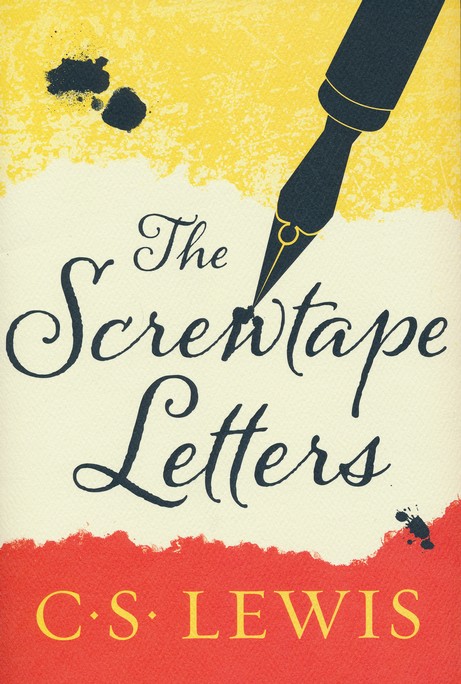
The Screwtape Letters by C.S. Lewis

The Screwtape Letters

The Screwtape Letters by C.S. Lewis was a school assignment that I was to read over a couple months. Considering school is now over (yahoo!), I finished this book a while ago.

The entire book is a set of letters from Screwtape, a demon, to his nephew Wormwood, a fallen angel who's job it is to tempt a young man referred to only as the "patient." It takes place during World War II, and that plays a part in the events.

It's interesting to read a book from the point of view of a fallen angel. The points made are undeniably good, and it feels like every other page is a slap in the face to the lifestyles of average "Christians." It's hard not to see many fragments of your own life in the life of Wormwood's "patient."

Overall, The Screwtape Letters is a true showing of Lewis's genius and his knowledge in Biblical facts. I believe that the author put a lot of himself into the novel; into the life of the "patient." It's a great philosophical read, and I highly recommend it to anyone with a decent vocabulary.

Saturday, May 12, 2012

Game Recommendations of May

Sometimes you just can't write a whole review of a game, but it's good enough that it deserves some mention. Here are some games I've played in the previous few months that didn't get their own full reviews, but I definitely recommend them anyway.


NightSky

NightSky has beautiful visuals, touching music, and it's one of those things that prove that games don't need to be extremely hard—or hard at all—in order to be fun. It does also include an alternative mode with much harder puzzles for those looking for a challenge. The only downside to the game is the price, but $10 isn't much at all. I very highly recommend this game.
Systems: PC, Wii, 3DS
Official Website


PiCTOBiTS
It amazes me how people can still think up new Tetris-style concepts that are still fun. PiCTOBiTS is an addicting arcade game for DSiWare with fun chiptune music and a lot of different levels. In each level you try to clear different colors of blocks in order to create various different characters from oldschool NES games. If you have a lot of time to kill, check it out.
Systems: DSi, 3DS
Official Webpage


Galcon Fusion
Galcon Fusion is a real-time strategy game in space, with a ton of game modes, difficulty levels and achievements. It's addicting, in a good way, and can spawn numerous hours of game time to take up... time. Oh, it's also colorful and pretty. Highly recommended if you like strategy games or multiplayer games in general.
System: PC
Official Website


3D Classics: Kid Icarus
This is the original NES Kid Icarus game remade in 3D, with some other revamped features as well. One worth mentioning is that the game now has cool level backgrounds, so it's not always black. Basically, it makes for a super fun platformer and a worthy remake of the old game. My biggest problem with it is the fact that half the game is far too hard and the other half is far too easy. It seems to alternate between extreme difficulties. Regardless, this game is certainly recommended.
System: 3DS

Monday, May 7, 2012

Forbidden by Ted Dekker and Tosca Lee

Many years have passed since civilization's brush with apocalypse. The world's greatest threats have all been silenced. There is no anger, no hatred, no war. There is only perfect peace... and fear. But a terrible secret has been closely guarded for centuries: Every single soul walking the earth, though in appearance totally normal, is actually dead, long ago genetically stripped of true humanity.

Fleeing pursuit, with only moments to live, a young man named Rom stumbles into possession of a vial of blood and a piece of cryptic writing. When consumed, the blood will bring him back to life. When decoded, the message will lead him on a perilous journey that will require him to abandon everything he has ever known and awaken humanity to the transforming power of true life and love.

But the blood will also resurrect hatred, ambition, and greed.

Set in a terrifying, medieval future, where grim pageantry masks death, this tale of dark desires and staggering stakes peels back the layers of the heart for all who dare to take the ride.
With one month from the release of the series' second installment, I finally finished Ted Dekker and Tosca Lee's highly-acclaimed Forbidden, which I first started reading in October 2011.

The first in the Books of Mortals trilogy takes place in an alternate future in which fear is the only emotion genetically allowed. Although the setting and story are certainly good, the book failed to meet its hype. The book was slow, and even got to be quite boring in many places. It's a struggle to get through, making an unpleasant experience.

The antagonist is a man named Saric. He was given a serum by alchemists that brings back some of his emotions, but only the horrible ones. Basically, he was turned into a beast in a world that knew only fear. He sickened me to the point that I truthfully say I have never hated anyone, real or fictional, more than I hated Saric. That is not how to write a good bad guy! A well-written bad guy is one who you can see reason behind; one you can sympathize with. Ted Dekker has a trend of writing antagonists who are mentally unstable and/or retarded, and no offense to him, but that is the most annoying kind of bad guy in any story. By the end of Forbidden I literally wanted to butcher Saric.

There was a flaw in the story's concept. It's an awesome concept for a setting, but it's not possible to get rid of all emotions except fear. Among the characters who could only experience fear, I saw other emotions as well, such as confusion and desperation. Those could be considered attributes to fear, but that's irrelevant, because they're also emotions separate from fear. If someone in that universe suppresses their fear, they can still be confused, causing a major flaw in the idea of no emotions but fear. Other emotions are necessary in order to have only fear, and that in itself is contradictory.

Forbidden was good, but there were a lot of things I had a problems with; all those listed above, in addition to all of the blood, gore, and sexuality. There's nothing necessarily wrong with having blood, gore, or sexuality in a novel, as long as they don't go overboard. I, for one, am someone very easily grossed out, and there was a lot of gore that I wasn't comfortable reading. The authors could have been just as realistic in their writing while just being less explicit. I know that, because they've done so in the past. As for the sexuality factor, the main evil character, due to his dark emotions, was quite a pervert, wanting to bed every woman he laid eyes upon. He very nearly raped one of the main characters at one point. Another reason to be irritated at Saric and his idiocy.

Yes, yes, as everybody told me, the book improved massively by the end. The pace quickened, the story developed, and everything turned out really cool. But does a book getting good by the end classify it as a good novel? Unfortunately, not this one. If the entire first half of the book had been retold in half the length, it would have been twice as good. Considering the story got good by the end, I'll be eagerly awaiting the release of Mortal, the second in the series. Poor, poor Forbidden, however, is left with only three stars out of five. If not for the second half of the book, it would have been left with two.