Showing posts with label Book Reviews. Show all posts

Saturday, February 20, 2016

Cat Getting Out of a Bag and Other Observations by Jeffrey Brown


Cat Getting Out of a Bag and Other Observations by Jeffrey Brown is, to put it simply, the greatest thing ever. It's literally a bunch of random, hilarious, and adorable cat videos, in the form of 9-panel (or occasionally 18-panel) comics, instead of actual videos. That's the whole book.

Cartoonist Jeffrey Brown has created over 30 books, about all sorts of different subjects. He even released a follow-up to this book, called Cats Are Weird: And More Observations. This man has way too much time on his hands, and that's why his work is brilliant.

Saturday, January 16, 2016

Orc Stain by James Stokoe


The world has been overrun by orckind for a million millennia. Kingdoms rise and fall in a matter of months—or days. The world is chaos, but chaos is all the world's ever known.

However, one day an orc rises to power—and doesn't fall back down. He manages to unite kingdoms never thought uniteable, and conquer lands never thought conquerable. Timeless borders are abolished; ancient lands are littered with the corpses of any who stand in the way of the southern world's new tyrant. Nothing can escape the wrath of the Orctzar.

Far up north lives our protagonist, a one-eyed orc nicknamed "One-Eye". (None of them have actual names, but the greatest are given numbers post-mortem.) One-Eye likes to stick to his own business—busting locks, and surviving. He lives in a part of the world that's mostly at peace—or as much at peace as a province filled with orcs ever could be—doing what he can to stay out of trouble.

Unbeknownst to One-Eye, the Orctzar has learned from an ancient prophetess that in order to find an object of great power that he seeks, he must find an unspecified one-eyed orc in the north. Eager to obtain this object, and be supreme ruler of the entire world, the Orctzar sends multitudes of troops to round up every one-eyed orc in the northern hemisphere of the planet. One-Eye obviously wants nothing to do with these goings-on, and hightails the hell out of there.

This is the premise to the first volume of Orc Stain by James Stokoe, a beautiful, crazy and vulgar graphic novel about a brilliant and insane world. Stokoe is the creator, writer, artist, colorist, and letterer. Seeing as this is a top-quality graphic novel with incredible art, hilarious writing, and an tremendous amount of worldbuilding, that is mightily impressive.

Stokoe takes us on a highly fantastical tale though incredibly intricate lands, full of strange creatures and odd whatnots. It's a very unique concept, and the amount of content packed into this book (168 full-color pages) is impressive. The fact that it was all created one man is awe-inspiring. If this seems like something you'd be interested in, definitely check it out.

Caution: Orc Stain contains adult content and is intended for mature readers.

Sunday, October 6, 2013

Where's Your Mark by Jeremy Cowart


Where's Your Mark is a nonfiction book by Jeremy Cowart about numerous people—ranging from ordinary folk to well-known celebrities—making their mark in the world today through their faith in Christ and their works. The book is full of photographs and stories, and it's quite an interesting read.

The cover of the book is strangely silver, so that you can see your own reflection as though it were a mirror. I'm not exactly sure what this is for, but I'm certain it's symbolic.

The stories in the book are certainly interesting, and the various entries could possibly be used as devotionals in small groups or other such situations. Included in Where's Your Mark is the entire book of Mark from the NIV Bible. This was a good idea in theory, but each time there's a page from Mark the page will cut off in the middle of a verse, and it won't resume until a few pages later, after a couple more stories have been told. That part certainly could have been compiled better.

Where's Your Mark is a fascinating book filled with fascinating stories, but at this stage in my life it didn't really hold my interest. I may just hand it off to a friend sometime, or I may just keep it for later.

Where's Your Mark was published on March 19, 2013.
This book was sent to me for free from Zondervan Publishing. http://www.BookSneeze.com/

Tuesday, September 17, 2013

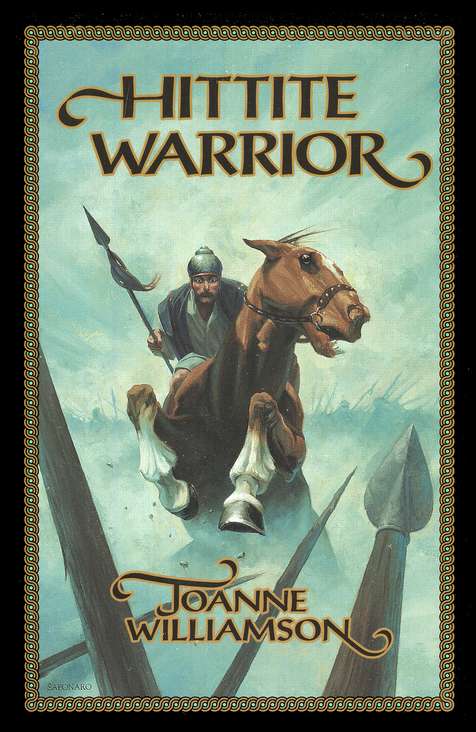
Hittite Warrior by Joanne Williamson

Hittite Warrior

In my years as a homeschooler, I had to read a lot of literature. I still do in high school, but it's very different. One book that I read in my middle school years was Hittite Warrior by Joanne Williamson. It's historical fiction from the time of the Bible's book of Judges. I loved it when I first read it, and I was excited to pick it up again when it was assigned in high school.

The story focuses on Uriah, a Hittite who has found himself homeless and without family due to his homeland, Great Hatti, being invaded by the "sea people." He must make his way to Canaan, and eventually, though his adventures, find himself in a war between Canaan and the tribes of the Hebrews. Having no real allegiance himself, his nation being gone forever, Uriah must ultimately decide which side he is to join, and in the name of which god, if any, he will fight.

Hittite Warrior is unique, both in story and in writing style. It focuses on a portion of history largely ignored by today's society, because it was so very long ago and hardly relevant to anything anymore; but that's part of what makes it a good story. Since the reader might not know very much about this entire era, it almost feels like it could be from another world's history, rather than our own. All in all, it's fascinating.

The writing style is unique because it often moves events along at a very quick pace, almost as if the narrator is summarizing the events, but at the same time it never leaves any details ambiguous. It doesn't spend paragraphs and paragraphs explaining something, but rather explains it quickly in a way that you fully understand. It doesn't make you feel any less for the characters or their emotions. It's quite unlike almost anything else I've read, and it's very well done.

My biggest complaint with the book is foreshadowing. A lot of details are bluntly foreshadowed, but it's actually somewhat appropriate due to the writing style. It does not make Hittie Warrior any less of a spectacular read.

Hittite Warrior is a decently short book, and it's very easy to read. It tells a brilliant story with characters that the reader will care about. Uriah Tarhund makes for a great main character and narrator, and his struggle is realistic and relatable. I would never want to be in his position at any point of the book.

Overall, you should read this book. It's worth the time.

Saturday, August 17, 2013

The Rithmatist by Brandon Sanderson


Disclaimer: This review will include the basic premise of the story, told in my own way; so if you object to spoilers as much as I do, you should probably skip this review. However, if you're not that kind of person, feel free to read on. The review actually contains no spoilers beyond the basic premise.

The Rithmatist is a young adult fantasy novel written by the master of fiction himself, Brandon Sanderson. It takes place in an alternate, steampunk version of our world. It's not an alternate future; it's an alternate world entirely.

As is traditional for a novel penned by Sanderson, The Rithmatist has a unique magic system that is so utterly unlike anything else, that once you actually understand it, you're shocked by its brilliance. I could try to explain Rithmatics to you, but it's not so easy to explain. Sanderson explains how it works throughout the entirety of the novel, for you can't just learn it all at once. It takes time to understand, but it's brilliant.

In the United Isles of America, those who can use Rithmatics—they're called Rithmatists—are of much higher social class than others. That's because they are the isles' main hope of staying safe. Rithmatics involve creating things using chalk, including defenses and possible weapons. In the isle of Nebrask, there's a tower from which swarm thousands of wild chalkings—savage creatures made purely from chalk but easily capable of killing people in terrible ways. The Rithmatists are the main force keeping the chalkings inside Nebrask and not letting them get into the other fifty-nine isles, fully populated with people.

In the isle of New Britannia, Joel Saxon is a student at Armedius Academy, where they train both Rithmatists and upperclass people who don't have the power of Rithmatics. He himself is not a Rithmatist, nor an upperclassman, but rather the son of a now-dead employee of the academy. All his life he's been fascinated by Rithmatics and has always wished that he could use them, but he lost that chance long ago.

Not everyone becomes Rithmatists. In fact, only a very few amount of people do, always chosen at age 8. Every child must go through the inception ceremony when they're young, which will completely determine their future. If they go through the ceremony and nothing changes, they go on with their lives. If they suddenly discover they can use Rithmatics, they get ridiculous privileges, get education at a special school (such as Armedius), serve in Nebrask for ten years, and then get a pension for the rest of their lives.

As a summer elective before his final year at Armedius, Joel finds himself working with the Rithmatist Professor Finch (a non-Rithmatist working with a Rithmatist is almost unheard of) on a secret project involving the disappearances of a couple Rithmatist students off-campus. Thus begins the fascinating and brilliant story of The Rithmatist.

Now, by this time I know Brandon Sanderson. I know he's going to have amazing, likable characters; I know he's going to have a brilliant magic system that will blow my mind once I properly understand it; I know that he's going to have plot twists that will make Ted Dekker look like the writer of children's books. That last fact is a trademark of Sanderson. If you think you know where the story is going, something's going to change that you will never see coming. That will happen numerous times with every book you read that he has penned.

If there's somebody who knows how to craft a story better than anyone else, it's Brandon Sanderson. He'll always leave hints to things along the way that you'll never pick up on when you first read a story. Things that will later blow your mind. As always, Sanderson has created a brilliant world with a fascinating and unique magic system that nobody could ever think of. When you spend seven years developing a book, it's going to be amazing.

I highly recommend that you pick up this book in print format, rather than digital. Each chapter begins with a diagram, often depicting something to help the reader to continue to understand Rithmatics, or something of the sort. With a print version of the book, it's easy to flip back to the beginning of any chapter at any time you want to refresh your memory, and I found myself doing that all the time. In addition, it's always easier to check the map anytime you like (which, by the way, is a really cool map).

So what, you ask, is the verdict? Well, The Rithmatist is a brilliant and well-crafted story by one of the greatest storytellers in history. The characters aren't just lovable, they're awesome. In addition, the novel takes place in a fascinating world with a unique magic system that nobody but Sanderson could even think up. I fell in love with the world, and I'm devastated by the fact that the sequel isn't estimated to hit shelves until 2015.

I can safely say I recommend this book. I can safely say you should go buy this book the very first chance you get. Thank you very much.

Friday, July 12, 2013

Crescent by Homer Hickam


Crescent is the second installment of Homer Hickam's Helium-3 series. It is highly recommend that you read the first book first.

Crescent does not pick up where Crater left off, instead taking place three years later. It's still the exact same world—same futuristic moon colony—with the exact same characters, but you can tell how much it's changed. War has broken out on Earth, on the moon, and everywhere in-between. Crater Trueblood, our protagonist from before, is a part-time helium-3 miner and a part-time soldier, fighting under Colonel John High Eagle Medaris against the crowhoppers, genetically-engineered troops sent by the UCW—the Unified Counties of the World, an alliance formed by over thirty nations on Earth. The reason for the war was that the UCW wanted control over the moon, and the residents of the moon were not going to let that happen.

With that little bit of premise, I will not tell you the story. If you are eager to learn it, you can look up a synopsis on any book-selling website, or check out most other reviews. I, however, would just recommend reading the books. What I will tell you, however, is that Crescent is amazing and it was definitely worth the wait. The main characters are now a few years older, and you can tell how much they've changed. Crater is no longer the super-naive kid anymore, but instead has grown into a wiser, slightly pessimistic young man who has seen too much in his short time. While the characters have clearly grown up, you can tell that they're the exact same people, just older. I, more than anyone, know how much even a simple year can completely change a person.

Crescent is an adventurous tale, once again taking the reader back to this alternate future that I love so much. I feel like it's a little more mature than Crater was, possibly simply because the characters themselves are older. The book can be humorous at times, and the author gave multiple nods to the first book through inside jokes. My biggest complaint with the entire book is that it ended. I mean, come on! It was so very good the entire way through, and then ol' Homer had to go ahead and end it! When I finished the last chapter I jumped out of my chair and started shouting at the author for ending the book, and ending it where he did of all places.

Now, of course, the next Helium-3 novel is to be the final book in the series. I am going to be truly sad when it's over, because I love this trilogy. I assume that the next novel will once again jump ahead in time a few years, and I absolutely cannot wait. Unfortunately, I have to. It comes out in a year.

Congratulations, Mr. Hickam, your world has once again stolen my heart. I eagerly look forward to the final installment, though I'll probably cry at the end because the series will be over. You're a brilliant writer. Keep up the good work.

Now if you'll excuse me, I'm off to make some turnip paste.

Thursday, July 4, 2013

Revisit: Crater by Homer Hickam


A year and a quarter ago I reviewed a book called Crater. It was written by Homer Hickam, the retired NASA engineer who penned the bestselling autobiography Rocket Boys, which was later made into the hit film October Sky.

My original review was a mistake. I focused too much on the book's faults, to the point that people who read my review thought I was saying it was cliché and cheesy and basically written for children. I made sure to state that I loved it, but because of the way I wrote it, people basically thought it had just been a guilty pleasure of mine. That's definitely not true, because my guilty pleasure is Colleen Coble novels.

What bothers me the most about my initial review is that the author himself misinterpreted it, and suggested that I might enjoy his novel The Dinosaur Hunter instead; to which my unspoken response was, "Dinosaurs? How boring! I want to go back to the moon!" (As a disclaimer, The Dinosaur Hunter is probably pretty good; I'm just not interested at the present time.)

While it's true that parts of Crater seemed a little bit cliché or cheesy, it's a brilliant novel and I think it deserves a revisit. I recently acquired the sequel, Crescent, and I decided that before reading it I would reread Crater, and then set the record straight on my blog.

To begin, I love this book. I only read it the first time about a year and three months ago, but it feels like it's been so much longer, to the point where a huge part of the book was downright nostalgic.

Crater takes place on a moon colony in the 22nd century, and the book spans over a decent portion of the moon, exposing the reader to what the future could be like. The author, being a former NASA engineer, put all of his scientific knowledge into making an intriguing and brilliant world that actually makes sense in the reader's mind. As the characters traveled the vast world, I often wished that I could be there as well, exploring the reaches of the moon.

The main character is Crater Trueblood, a naive teenager who was older than me the first time I read the novel, but whom is now pretty much the exact same age. Sometimes his character felt a little too naive, but he also had some great character development throughout the book.

At the beginning of the book Crater is sent on a mission with a convoy from his mining colony to the great Armstrong City, and from there even to outer space, and the closest to Earth he's ever been. It's a long journey with many hitches along the way. The story is beautifully written, even when you take into account the minor cliché elements.

Crater is a brilliant, suspenseful, and even somewhat tragic story. It takes place in an epic and well-crafted future universe, and the characters are great and memorable. Honestly, I haven't looked forward to any book in a long time as much as I've looked forward to the sequel.

I strongly apologize to anyone who read my initial review. Crater is awesome.

Saturday, June 8, 2013

The Emperor's Soul by Brandon Sanderson

The Emperor's Soul

The Emperor's Soul is a novella that takes place in the same world as Brandon Sanderson's debut novel, Elantris. It focuses on a master criminal named Wan ShaiLu who's found herself on death row unless she can fulfill a forbidden task appointed to her.
Book Description:
When Shai is caught replacing the Moon Scepter with her nearly flawless forgery, she must bargain for her life. An assassin has left the Emperor Ashravan without consciousness, a circumstance concealed only by the death of his wife. If the emperor does not emerge after his hundred-day mourning period, the rule of the Heritage Faction will be forfeit and the empire will fall into chaos. 
Shai is given an impossible task: to create—to Forge—a new soul for the emperor in less than one hundred days. But her soul-Forgery is considered an abomination by her captors. She is confined to a tiny, dirty chamber, guarded by a man who hates her, spied upon by politicians, and trapped behind a door sealed in her own blood. Shai's only possible ally is the emperor's most loyal councillor, Gaotona, who struggles to understand her true talent. 
Time is running out for Shai. Forging, while deducing the motivations of her captors, she needs a perfect plan to escape…
Sanderson introduces a new magic system in this story, called Forging. It has to do with the carving of "soulstamps," which can rewrite an object's history. The entire process is very hard to explain, and in the novella itself Sanderson explains it over a decent amount of time. While Forging is very hard to do successfully, if someone with the right skill works for enough time—usually over years—they can Forge something as ridiculous as a human soul.

Shai is forced to Forge the soul of the most well-known man in the entire Rose Empire in only one hundred days, which is virtually impossible. Thankfully, her captors don't know the slightest thing about Forging, so over this amount of time she can plan her escape without the others knowing what she's up to. The Emperor's Soul is about what transpires during those one hundred days.

The narrative of the book is almost entirely from the point of view of Shai, allowing the reader to get to know her and sympathize with who she is. Though the world may not approve, there's a reason she does what she does. As always, Sanderson delivers with his amazingly well-crafted world and characters. During Shai's captivity, she begins to develop a fondness of the arbiter Gaotona, some of her guards, and even the emperor himself. An emotional aspect of the story is that even if Shai truly can Forge the emperor's soul in such a short time, he won't actually be the emperor that once was. He'd just be a copy, no matter how real that copy was.

In the end, The Emperor's Soul by Brandon Sanderson is a fantastic read. For a short tale, it's very well-developed and makes the reader feel at home in the fictional world. If you can spare a few dollars, I very highly recommend it.

Saturday, June 1, 2013

The River by Michael Neale


The River by Michael Neale is a novel I acquired a while ago because of a hype. Many employees of the publishing company had read it and very highly recommended it, so I thought I would give it a shot. While it wasn't at all a bad book, it was certainly a disappointment.

The story starts out in the present day, where a fifty-ish man named Gabriel Clarke approaches the story's narrator and tells him that he's on his way back from travelling around the world, running National Geographic's Top Ten Most Dangerous and Beautiful Rivers in the World. After exploring numerous beautiful locations, meeting tons of new friends, and encountering multiple near-death experiences, he was ready to head home. And then he tells the narrator his life story, which is the bulk of the book.

Now, that might sound like a really intriguing story, but in reality the story doesn't focus at all on that long adventure he had. It's about his childhood and early years. When he was five, he watched his father die saving another man's life in The River. For the next fifteen years he would grow up with his mom in a small town in Kansas, before eventually, after a series of events, work at a summer camp in Colarado, where he would rediscover his true love of The River.

Right off the bat, I had problems with this book. The story is supposed to be about Gabriel, but the first two chapters are almost entirely from the point of view of his parents. If this is Gabriel's story, why is it being told through the eyes of others? In addition, the writing style of this book looks like it was written by a teenager. Not that it has bad grammar or it's poorly written or anything, but it just seems like it'd be something that I would write myself, if I had the ability to stay on a single writing project long enough to finish it.

The whole book just doesn't seem at all realistic. Some would argue that that's the point of fiction, but not when a book tries to be realistic. You can tell that the author meant for it to be a story that could have actually happened, but it didn't at all turn out that way. The entire story felt forced. Like the storyteller didn't know how to tell a story.

The dialogue is written in a way so that almost all of the characters appear to have the same personality (a personality which isn't in the slightest bit realistic), and sometimes it just felt like the author didn't know how things work. Things like animal behavior and what it's like to live in a small town—you get the impression that the author thought he knew what he was talking about, but he really, certainly didn't.

There's also the allegorical elements, such as whenever any river is mentioned at any of the book, the characters refer to it as The River. And everyone thinks The River is amazing beyond anything else, to the point where you get bored every time it's mentioned. Throughout the book, The River is a very obvious and poorly-implemented metaphor for God. If the author wanted to write a good book, he should have removed all allegorical content completely and just wrote it as a story. It would have been much more enjoyable.

Another part of the book I didn't care for was that some romance elements were added in, but for no purpose. If they'd been expanded on it might have added to the story, but as they were they were kind of pointless. Perhaps they were part of the allegory, and that would be why they could have been a brilliant addition, but they weren't. And on that point, the romance was absolutely unrealistic.

However, after pointing out all these parts of the book that made it not nearly as great as it could have been, I also have to point out that these can all be attributed as minor gripes. While I had problems with the story, other readers may not. I actually found the book quite enjoyable at times, though I always got bored when the characters got started talking about The River.

One of the aspects I liked about the book—though I'm not sure they should be considered as pros—is the similes used by the author. I don't know why, but I just found them hilarious. The sad part is that the author didn't mean them to be cheesy or hilarious; he meant them to be serious. However, I might be the only person who's even taken note of them.

Regardless of all the faults, there are still great gems in The River. I enjoyed it as a whole, and I know other people who would enjoy it a lot more than I did. While it could be boring, cliché, and poorly worded at times, I can see why people would like it. However, I find it difficult to recommend a book that I would not purchase myself.

The River was published on September 18, 2012.
This book was sent to me for free from Thomas Nelson Publishing. http://www.BookSneeze.com/

Saturday, May 25, 2013

To Kill a Mockingbird by Harper Lee

To Kill a Mockingbird

To Kill a Mockingbird. It's one of the most well-known novels of all time. It's one of the most-loved, and one of the most-hated. This year I read it for the first time, and here are my thoughts.

Our story begins from the point of view of Jean Louise "Scout" Finch, a six-year old girl who lives with her brother and her father—an attorney of law—in the fictional setting of Maycomb, Alabama in the early to mid 1930s. The story is about her life over the course of three years, with a range of interconnected adventures that develop both her personality and the personality of her brother, Jem.

I won't go into detail about the story—it's hard to summarize and far better to experience yourself—but this is one of the best stories I have ever read. Amazing, relatable characters, and an intriguing and lovable story.

Because of how little detail I am willing to go into, this is more of a recommendation than a review. It's a brilliant story, featuring some of my favorite fictional characters of all time. I love how sometimes an author can pen stories like these, from the point of view of a precocious child. Shows just how smart young'uns can be, while at the same time assuring us that they really are their supposed age, and still make the mistakes that children of their age make.

Though the story is written from the point of view of a young girl, it's definitely a book for adults. It's realistic, which means there are some not-so-pleasant aspects and subjects that may want to be avoided by younger generations. Then again, I'm the only who's talking about how I love precocious kids, so I guess it all depends on the individual.

Harper Lee's To Kill a Mockingbird is a masterpiece. I couldn't recommend it any higher.

Monday, April 15, 2013

The Old Man and the Sea by Ernest Hemingway

The Old Man and the Sea

The Old Man and the Sea is a novella by classic writer Ernest Hemingway. It tells the story of an old man and his attempt to catch a giant fish. The old man's name is Santiago, but that's not important.

An elderly fisherman is unlucky—he hasn't caught a good fish in a great long time. The townsfolk know he's unlucky, and so do the parents of the boy who used to be his assistant. Hence the words "used to." Now, old Santiago struggles to get by, though he goes out to sea every single day to hope against hope that a fish will bite.

One day, a fish bites his bait. He's finally caught something, eh? But this fish is so large that he can't haul it in. Instead, the great fish swims off with the bait in its mouth, dragging the boat and the old man with it. Hour after hour goes by, and the old man can do nothing but wait for the opportune moment to kill the great fish and haul it back, strapped to the side of the boat if necessary. But the question is... will that ever-so-persistent fish give in and die, or will the old man die first, from lack of supplies and no way to escape the vast sea?

The Old Man and the Sea is a fairly good book. It's not a masterpiece, but it's definitely worth a read. The story is sad, but few good stories aren't at some point. I probably wouldn't have ever read this in my own time (it was a school assignment), but it's definitely worth a shot. A reader might get bored from how much time Hemingway spends describing the process of fishing in Cuba, but at least this novella's got nothing on Moby Dick in that matter.

If you need something to read, check it out. It's not worthy of cutting the line on your reading list, but it's good nonetheless.

Monday, April 8, 2013

Catching Fire by Suzanne Collins


Catching Fire is the second book in Suzanne Collins's Hunger Games Trilogy. This is not a warning I give often, but I do not recommend reading this review until you have read both The Hunger Games and Catching Fire, as it contains spoilers.

One year after the events of the 74th Hunger Games, we are once again entered into the mind of one Katniss Everdeen, who'd survived the arena as a victor, along with a boy named Peeta Mellark, in the first double-winning in Hunger Games history. For those who do not know (in case you did not heed my advice and are reading this review anyway), the Hunger Games are an annual reminder from a tyrannical government in which 24 teenagers are drawn from the twelve districts and placed in a miles-wide arena to fight to the death.

Seventy-five years ago, a rebellion broke out in the country of Panem (formerly known as North America, long ago), and the Hunger Games were served as a reminder every year since that opposition to the government was a very, very bad idea. But in the 74th Hunger Games, Katniss and Peeta showed the world that the government wasn't as great and powerful as they claimed. While Katniss only wanted to keep herself and her friend alive, she unintentionally sparked a new hope for rebellion, and now that spark would come to haunt her.

In the sequel to the renowned Hunger Games, we are returned again to the dystopian world of Panem. While the first book worked to introduce its readers to the strange future world, the second book no longer has to do that. You're already familiar the world, the characters, and the society... so instead, Catching Fire focuses more on plot; and man, is it good.

Suzanne Collins not only returns with a worthy sequel, but the book surpasses its predecessor. In a gnarled twist, the competitors of 75th Hunger Games are taken entirely from the list of former victors, including Katniss and Peeta. This not only makes for interesting plot, but it makes the whole story more personal. For much of the final half of the book, I was desperately hoping that the ending would not be cliché. In the end, I was not disappointed. In fact, the ending was so awesome that my heart was beating quite hard throughout it.

In conclusion, Collins did a wonderful job of continuing her story. Many people don't care for the book—or at least they like the first one better—but I can't disagree more. The Hunger Games was a spectacular novel, but Catching Fire was phenomenal. Very highly recommended.

Now, I've been told that Mockingjay, the final installment of the trilogy, is a bit of a disappointment; but since I was told the same for Catching Fire, I'm remaining optimistic. I don't plan on reading it immediately, but perhaps sometime within the next few months. Stay tuned!

Sunday, March 10, 2013

Flying Eagle by Sudipta Bardhan-Quallen


Flying Eagle by Sudipta Bardhan-Quallen is a children's book I found and read in a museum's bookstore. It had absolutely nothing to do with the museum, but it impressed me enough for me to write up a quick review.

In short summary, this is a poem about an eagle trying to find food for his young, and the adventures he has on his way. It's short and simple, but at the same time it's beautiful. The book is illustrated by Deborah Kogan Ray, whose gorgeous imagery adds a wonderful flare to the already impressive poem.

Though I had not on me the money to purchase this gem, I highly recommend it. Flying Eagle is beautiful.

Thursday, January 24, 2013

The Circle Series: Visual Edition by Ted Dekker

Circle Series Visual Edition: Black, Red, and White Graphic Novels

If you know me, you probably know I've been a Ted Dekker fan for a long time. Some of his stories I can't stand, while others are simply amazing. One of Dekker's most well-known works is his Books of History Chronicles, which ties several of his series and standalone novels together. That all started with the Circle Trilogy, released back in 2004. It was the Circle that introduced readers to the wondrous fantasy world of Other Earth, and it set the foundations for many spectacular stories to come.

The Circle Series: Visual Edition contains the complete graphic novels Black: The Birth of Evil, Red: The Heroic Rescue, and White: The Great Pursuit, based on their counterpart novels of the same names. The fourth and final novel in the literary series, Green: The Beginning and the End (or Green: The Last Stand) has not yet been adapted into graphic novel format. This is fine, and actually a good thing, because it works better as the standalone sequel to three of Dekker's series, and should only be read after reading all of its predecessors.

The Visual Edition is surprisingly pretty good. I actually liked the art style once I got used to it. It still follows the same story as the novels, of course, but it feels largely abridged. This is needed, so that it will even fit in comic format, but it doesn't feel like it tells the full story. It would be confusing and probably cheesy to people who have not already experienced the story.

My biggest complaint with the Visual Edition of the Circle Series is that it's not a good place to start the story for those who have not read the novels. Because the creators had to skip a lot of content, the plot feels slightly rushed and confusing. In addition, my favorite scene from the novel White was removed altogether.

In conclusion, it's a fun and cool way to revisit the world of the Circle, but only to those who have already experienced the trilogy. I would not recommend it those who haven't yet taken the plunge.

Saturday, June 30, 2012

Amelia's Last Secret by Eric Wilson


Amelia's Last Secret is a novella by bestselling author Eric Wilson about the fate of Amelia Earhart—one of the most prominent and well-respected women in the history of the world. It is available on Amazon for $2.99 exclusively as an ebook.

Everyone knows Amelia Earhart, and everyone has at least speculated about her mysterious disappearance in history. Leave it to somebody like Eric Wilson to take the facts as we know them and write a brilliant story from it. He took real people, events, and information, and put them all together in an intriguing and believable manner full of mystery and suspense.

The novella is split into four parts, taking place over the past seventy-five years:
Part One - July 1, 1937
Part Two - June 8, 1944
Part Three - May 17, 2012
Part Four - July 2, 1937

The first part begins from the point of view of Amelia Earhart, and ends with a cliffhanger, which is concluded in the final part. The two middle parts continue the story of how Ms. Earhart's fate was discovered. All four parts were extremely well-written and make you want to continue reading. The amount of research put into the story is astounding and truly adds life to the tale.

Eric Wilson is an amazing writer, and Amelia's Last Secret helps to prove it. The ending is a little sad—but you can't deny that the inevitable would happen. The novella could make a great movie, or at least a short film. Kudos to Mr. Wilson for writing such a masterpiece. It is well worth your reading time.

Saturday, June 16, 2012

The Truth About Forgiveness by John MacArthur


This is a book in a series of three books by John MacArthur. I had to choose one out of The Truth About Grace, The Truth About Forgiveness, or The Truth About the Lordship of Christ to read and review. I chose the one that I would be the most interested in, as forgiveness is something I have always struggled with.

I didn't expect much from the book; nonfiction generally bores me by explaining things I already knew in five times the amount of words necessary. I do admit sometimes I thought it was a little wordy—even for a book only a little over a hundred pages—but that is to be expected, and it didn't happen nearly as much as I thought it would.

I started the book genuinely surprised; MacArthur started at a point I wouldn't expect, and continued explaining what I had never thought of before. That, in itself, is something wonderful. I began expecting little, and what I found was more than I could have hoped for.

The first chapter made me think a lot. Sometimes I thought, "He can't say that, because it's very apparent that he's never experienced that himself," but every time as I kept reading I realized that this man truly knows what he's talking about, whether he's experienced "certain things" or not.

The Truth About Forgiveness is not a typical Christian nonfiction book, basically putting a boring sermon I've heard before into text format. It's something entirely unique, and for the first time something actually worth putting into book format. It focuses much on what Jesus said about forgiveness, through parables and stories, along with actual happenings, but it does it in a way that grabs your attention and keeps you interested. What's more, it actually uses good points that you might not have thought of.

It's extremely rare that a nonfiction book, especially about Christianity, does not disappoint me, but this one not only didn't disappoint me, it actually impressed me. When I saw the dozens of five-star ratings for the book, I inwardly chuckled and knew it would have a lot to prove if it were going to get anywhere near that rating from me. Because face it, everyone: sermons and books about forgiveness are generally just plain boring. We never truly hear what we need to hear. John MacArthur's book, however, is different.

I have never recommended a nonfiction book as highly as I recommend this one. Five stars.

The Truth About Forgiveness was published on May 1, 2012.
This book was sent to me for free from Thomas Nelson Publishing. http://www.BookSneeze.com/

Thursday, May 31, 2012

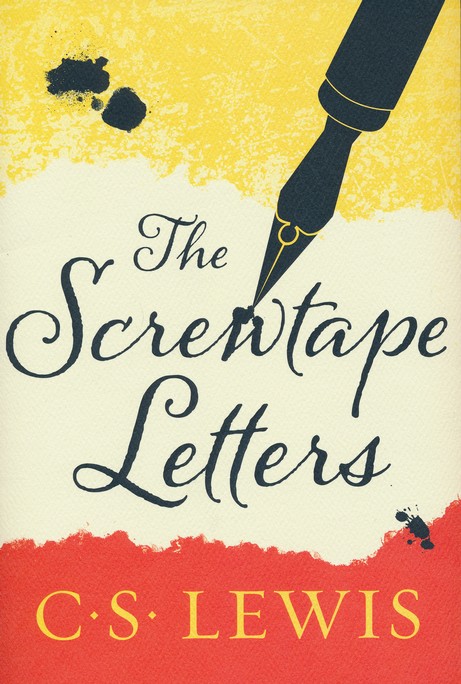
The Screwtape Letters by C.S. Lewis

The Screwtape Letters

The Screwtape Letters by C.S. Lewis was a school assignment that I was to read over a couple months. Considering school is now over (yahoo!), I finished this book a while ago.

The entire book is a set of letters from Screwtape, a demon, to his nephew Wormwood, a fallen angel who's job it is to tempt a young man referred to only as the "patient." It takes place during World War II, and that plays a part in the events.

It's interesting to read a book from the point of view of a fallen angel. The points made are undeniably good, and it feels like every other page is a slap in the face to the lifestyles of average "Christians." It's hard not to see many fragments of your own life in the life of Wormwood's "patient."

Overall, The Screwtape Letters is a true showing of Lewis's genius and his knowledge in Biblical facts. I believe that the author put a lot of himself into the novel; into the life of the "patient." It's a great philosophical read, and I highly recommend it to anyone with a decent vocabulary.

Monday, May 7, 2012

Forbidden by Ted Dekker and Tosca Lee

Many years have passed since civilization's brush with apocalypse. The world's greatest threats have all been silenced. There is no anger, no hatred, no war. There is only perfect peace... and fear. But a terrible secret has been closely guarded for centuries: Every single soul walking the earth, though in appearance totally normal, is actually dead, long ago genetically stripped of true humanity.

Fleeing pursuit, with only moments to live, a young man named Rom stumbles into possession of a vial of blood and a piece of cryptic writing. When consumed, the blood will bring him back to life. When decoded, the message will lead him on a perilous journey that will require him to abandon everything he has ever known and awaken humanity to the transforming power of true life and love.

But the blood will also resurrect hatred, ambition, and greed.

Set in a terrifying, medieval future, where grim pageantry masks death, this tale of dark desires and staggering stakes peels back the layers of the heart for all who dare to take the ride.
With one month from the release of the series' second installment, I finally finished Ted Dekker and Tosca Lee's highly-acclaimed Forbidden, which I first started reading in October 2011.

The first in the Books of Mortals trilogy takes place in an alternate future in which fear is the only emotion genetically allowed. Although the setting and story are certainly good, the book failed to meet its hype. The book was slow, and even got to be quite boring in many places. It's a struggle to get through, making an unpleasant experience.

The antagonist is a man named Saric. He was given a serum by alchemists that brings back some of his emotions, but only the horrible ones. Basically, he was turned into a beast in a world that knew only fear. He sickened me to the point that I truthfully say I have never hated anyone, real or fictional, more than I hated Saric. That is not how to write a good bad guy! A well-written bad guy is one who you can see reason behind; one you can sympathize with. Ted Dekker has a trend of writing antagonists who are mentally unstable and/or retarded, and no offense to him, but that is the most annoying kind of bad guy in any story. By the end of Forbidden I literally wanted to butcher Saric.

There was a flaw in the story's concept. It's an awesome concept for a setting, but it's not possible to get rid of all emotions except fear. Among the characters who could only experience fear, I saw other emotions as well, such as confusion and desperation. Those could be considered attributes to fear, but that's irrelevant, because they're also emotions separate from fear. If someone in that universe suppresses their fear, they can still be confused, causing a major flaw in the idea of no emotions but fear. Other emotions are necessary in order to have only fear, and that in itself is contradictory.

Forbidden was good, but there were a lot of things I had a problems with; all those listed above, in addition to all of the blood, gore, and sexuality. There's nothing necessarily wrong with having blood, gore, or sexuality in a novel, as long as they don't go overboard. I, for one, am someone very easily grossed out, and there was a lot of gore that I wasn't comfortable reading. The authors could have been just as realistic in their writing while just being less explicit. I know that, because they've done so in the past. As for the sexuality factor, the main evil character, due to his dark emotions, was quite a pervert, wanting to bed every woman he laid eyes upon. He very nearly raped one of the main characters at one point. Another reason to be irritated at Saric and his idiocy.

Yes, yes, as everybody told me, the book improved massively by the end. The pace quickened, the story developed, and everything turned out really cool. But does a book getting good by the end classify it as a good novel? Unfortunately, not this one. If the entire first half of the book had been retold in half the length, it would have been twice as good. Considering the story got good by the end, I'll be eagerly awaiting the release of Mortal, the second in the series. Poor, poor Forbidden, however, is left with only three stars out of five. If not for the second half of the book, it would have been left with two.

Wednesday, April 18, 2012

Crater by Homer Hickam


A mining colony on the moon, a teen sent on a deadly mission, and a secret bigger than two worlds. It’s the 22nd Century. A tough, pioneering people mine the moon for Helium-3 to produce energy for a desperate, war-torn Earth. 
Sixteen-year-old Crater Trueblood loves his job as a Helium-3 miner. But when he saves a fellow miner, his life changes forever. Impressed by his heroism, the owner of the mine orders Crater to undertake a dangerous mission. Crater doubts himself, but has no choice. He must go. 
With the help of Maria, the mine owner’s frustrating but gorgeous granddaughter, and his gillie—a sentient and sometimes insubordinate clump of slime mold cells—Crater must fight both human and subhuman enemies. He’ll battle his way across a thousand miles of deadly lunar terrain and face genetically altered super warriors in his quest to recover an astonishing object that will alter the lives of everyone on the moon.
Crater was written by Homer Hickam, the author of the autobiography Rocket Boys that was adapted in 1999 as the film October Sky. I saw the film years ago and loved it, and that's how I instantly became interested in this novel when I heard that Homer wrote it. The story of October Sky was about Homer's life as a young man: his father was a coal miner and wanted him to become one as well, but Homer saw his future along a different path, and eventually became a NASA engineer. Many years later, after the events of his autobiography, Homer retired and became a writer of both fiction and nonfiction. Though at this current time I've only read this one that he's penned, the book descriptions of many of his books imply that he uses much of his knowledge from both his life as a coal miner's son and his life as a NASA engineer when writing his stories. This is definitely one such story.

Crater is of a lower reading level than I have read in a while—young adult, for sure—and sometimes it just seemed childish or cheesy. The narration would often mention some key piece of technology but would fail to even hint at what it actually looked like or how it worked. Sometimes it would fail to mention what certain things even did. A lot of the main character's mission that was assigned near the very beginning of the book doesn't make complete sense until you know what exactly a cycler is and how a works—and that's something you don't find out until you have about fifty pages left in the entire book. These aren't details that would be considered plot spoilers; these are details that the narration seems to think readers should already know from the beginning but can't, because it's usually referring to technology that the author himself created.

In addition, several parts of the story were cliché. Early in the book the protagonist, Crater Trueblood, enters a sort of futuristic race, and his main opponent is one that everyone knows will win. The opponent is the type that uses as many forms of "foul play" as they can while making sure not to officially break any rules. With the help of his gillie and some ridiculous luck, Crater barely crosses the finish before his opponent. By that time they'd been the only two competitors still in the race. Does that sound familiar? Also, the main character is just a teenager, but he's extremely smart and can think of (and design) improvements for almost everything man-made he comes across. I suppose in the next book it will be revealed that General Caesar Augustus Nero—a character who, as you can obviously tell from his name, will turn out to be evil—is actually his father, long thought dead. (Yes, that is sarcasm.)

Crater is full of inconsistencies, clichés, and sometimes just ridiculousness, but in all honesty, it was the first book I've read in a long time that I've actually enjoyed reading. I read a lot of books recently that I loved, but it was the story or characters or ideas or setting or author's writing ability that I loved, not the actual reading part. For nearly a year and a half now reading has been a chore for me. I've grown to hate it, but I press on anyway to enjoy the wonderful worlds and tales that I fall in love with. My ability to read left entirely with my ability to focus, so even reading a little bit takes an excruciating amount of effort and time. Crater, though at times it was difficult to get through, (to an average person it could be probably read easily in a weekend) is a super easy read. I enjoyed reading it like I haven't for any other book I've read in a very long time.

The book had its faults, but enjoying the reading part of it really helped me to enjoy the rest, and the faults weren't nearly bad enough to ruin the book. The story and setting, when you look past the thin outer skin, is actually incredibly cool. Sometimes the book seemed a little bit like an Isaac Asimov novel, though of course on a far less mature level. The main character, Crater Trueblood, changed a lot throughout the story. He sometimes really surprises the reader, either with his level of immaturity or his level of maturity.

The author, Homer Hickam, harnessed loads of his scientific knowledge into the novel. Putting a bunch of techno-babble into a book geared toward the reading level of Crater is absolutely ridiculous, but for those of us who enjoy reading books at this level and also know a decent bit about science (so we can barely grasp what some of the techno-babble is about), this book a very enjoyable experience. Homer is a wise man, and I often felt myself wanting to save entire paragraphs or conversations as quotes, rather than just a character's line or two, as is traditional for quotes.

In the end, through its faults that I have probably made sound far worse than they actually are, Crater was a fun novel with a great story, cast and setting. If you enjoy young adult fiction and science fiction, check it out. I was expecting a lot from the author, so for a while into the reading I can't deny that I was disappointed. By the end, however, I was wondering when Hollywood will get enough sense to make this into a movie. I definitely can't now deny the awesomeness of the story and setting. Homer Hickam might not be an expert at converting his knowledge into all the correct words for a novel everyone will love, but his knowledge of space and the moon makes the technology he created seem all the more believable. I look forward very much to the next novel in the Helium-3 saga.

Crater: A Helium-3 Novel was published on April 10, 2012.
This book was sent to me for free from Thomas Nelson Publishing. http://www.BookSneeze.com/

If you read this review within the first couple days of its posting, you can follow this link for a chance to win Crater on Free Book Friday. The link also includes an interview with the author. Enter soon, though, because the giveaway ends on April 20.

Update 7/4/13: I gave this book a second review. You can read it here.

Wednesday, April 11, 2012

The Taming of the Shrew by William Shakespeare


I was assigned to read The Taming of the Shrew by William Shakespeare in literature class. I wasn't thrilled to read anything with a book cover such as the one above, but I endured it. We read a parallel text edition, meaning the original Old English text was on the left side of each double-page and the modern translated version was on the right. We were assigned to read the translated version, then listen to the same chapters in Old English via an audio version while we read along in our books. A short while after finishing The Taming of the Shrew, we went on a field trip to Navy Pier in Chicago, and by extension the Chicago Shakespeare Theater, to see it performed professionally.

This play is about a man named Lucentio who travels to the city of Padua to undergo various courses for his education. Once he arrives, he falls in love, from a distance, with a lovely girl named Bianca. But unfortunately for Lucentio and the girl's suitors, Hortensio and Gremio, Bianca's father Baptista will not offer her hand in marriage until his older daughter Katherine, a hot-tempered shrew, is found a husband. Lucentio then comes up with a brilliant plan: his faithful servant Tranio will pretend that he is Lucentio, and Lucentio will disguise himself as a tutor and try to court Bianca in secret. What ensues is possibly one of the poorest plays in human history... that is, unless performed by the Chicago Shakespeare Theater.

The plot of The Taming of the Shrew is cliché and downright poor. Any humor that would have been included in the play was dried out by the fact that it's just a script, not a performance. I came away from reading the play knowing that I will never recommend it for anyone. The BBC audio edition added color to a black and white movie—the characters had real personalities—and occasional music or other background noise made for a lot better storytelling than just an unimaginatively blank book. Hearing a whole cast of voice actors and actresses is a lot better than hearing various voices in your head playing the parts or listening to somebody else try to play every part while reading it to you.

My experience with the Chicago Shakespeare Theater, however, was completely different. For that, perhaps you should just read my school report, excluding the introductory paragraph that could have been much better.
One of the characters who stood out most in the play was Petruchio, who had taken upon himself the task of courting and wooing the not-so-lovely Katherina to be his wife. Matt Mueller played Petruchio’s part to perfection, but although Ericka Ratcliff did her part very well, the director's portrayal of Katherina could have been improved. Other characters that had notable parts were quite different from their stereotypical personalities, while still staying true to the original script. Hortensio (portrayed by Matthew Sherbach) and Gremio (portrayed by Mick Weber), the only two men openly courting the lovely Bianca (portrayed by Tiffany Yvonne Cox) at the story's beginning, were extreme contrasts in physical form—one older and huge, the other younger and tiny—but very similar in personality. This was one of many ways that the director added to the play's humor through the cast.
Overall, the two-hour trip to Chicago as a school field trip was worth it. The Chicago Shakespeare Theater's version of The Taming of the Shrew was amazing. Although the original script and language were used, it was packed with modern inside jokes from the director and cast, and that added much hilarity to the experience. Surprisingly, the modern rock music that played during various parts and scene changes was fitting. The theater could seat around five hundred people, and due to the amazing architecture and acoustics, the actors could be easily heard by the entire audience without using microphones if they properly projected their voices. A lot of the play’s humor would warrant a PG-13 rating, so it is definitely not a family-friendly play, but it can truly change one’s perspective of The Taming of the Shrew. It was unbelievably well done and, overall, a spectacular experience. This performance surpassed many expectations.
I loved the theater's version of the play, but I don't regret reading the script beforehand. Knowing the story and characters greatly enhanced my enjoyment of the experience. This adaptation felt like a wonderful dessert after an very unappealing dinner. The director took a unique perspective on almost every aspect of the play and, thank goodness, tuned the sexism down several necessary degrees. I would very strongly recommend you check out the play, but the final showing was on April 7, so it's a little too late to attend.

Petruchio may have tamed a shrew, but the Chicago Shakespeare Theater turned a lousy farce into a brilliant comedy.